
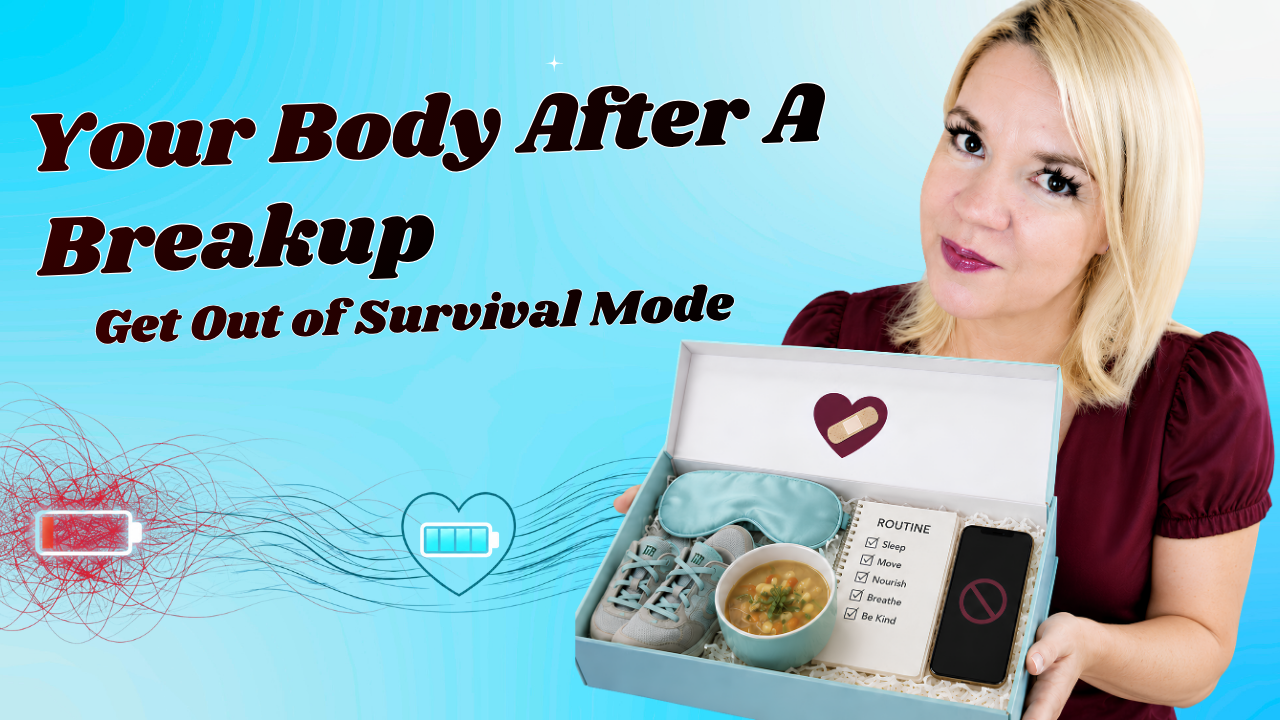

Five tips on REFRAMING your thoughts and RECLAIMING your healing journey.
Watch on YouTube here:
And listen on Spotify here:
Breakup? Schedule a free coaching session here.
When we talk about breakup recovery, we tend to focus on the emotional pain, and understandably so. But heartbreak does not confine itself neatly to your feelings. It can disrupt your sleep, drain your energy, interfere with your appetite, make it difficult to concentrate, and leave your body feeling generally out of sorts.
Learning how to take care of yourself after a breakup means recognizing that your body is going through this transition with you. Caring for it will not erase your grief or make you forget your ex by next Tuesday. It can, however, give you a steadier foundation from which to heal.
You also do not need to launch an elaborate post-breakup reinvention project. For now, focus on a few manageable forms of care: nourishing yourself, protecting your sleep, creating structure, moving your body, and reducing the contact that keeps you emotionally activated.
Key Takeaways
- Heartbreak can affect your energy, concentration, sleep, appetite, and physical comfort.
- Simple, accessible meals are more useful than expecting yourself to follow a perfect diet.
- A consistent sleep schedule can help keep the rest of your day from becoming more destabilized.
- Daily routines reduce decision fatigue and help rebuild self-trust.
- Gentle exercise after a breakup, particularly walking outdoors, can support your mood, sleep, and mental clarity.
- No contact can give your mind and body relief from repeated emotional upheaval.
- You do not need to change everything at once. One reliable habit is a meaningful beginning.
Why Learning How to Take Care of Yourself After a Breakup Matters
A breakup or divorce can be one of the most stressful experiences we face. That stress can show up in many ways: racing thoughts, poor sleep, physical tension, low energy, forgetfulness, difficulty making decisions, and trouble concentrating at work. When your energy disappears, looking after yourself becomes harder, which can create an unpleasant snowball effect.
You may also experience what I often call “breakup brain.” You forget ordinary things, struggle to make simple choices, or find yourself moving between anger, confusion, sadness, and physical discomfort. Separating from someone to whom you were deeply attached can even create withdrawal-like feelings. Your mind and body have grown accustomed to that person’s presence, attention, and place in your daily life; adjusting to their absence can be profoundly disorienting.
None of this means you should suppress your grief in the name of wellness. Grief needs room. Being intentional about healing does not mean ordering yourself to cheer up or treating sadness as a personal failure. It means giving yourself the physical support you need while you process what happened.
Sleep disturbances are especially common among the breakup coaching clients I work with. Some people cannot fall asleep because their thoughts will not slow down. Others wake during the night and immediately begin replaying the relationship. Still others sleep too much because getting out of bed means facing a painful new reality.
These responses can be part of the immediate aftermath of heartbreak, but you do not have to manage persistent or severe symptoms by yourself. I have sought professional help for sleep problems myself. If your physical or mental health symptoms continue, worsen, or significantly interfere with daily life, please speak with an appropriate healthcare or mental health professional.
1. Make Nourishment Easier, Not Perfect
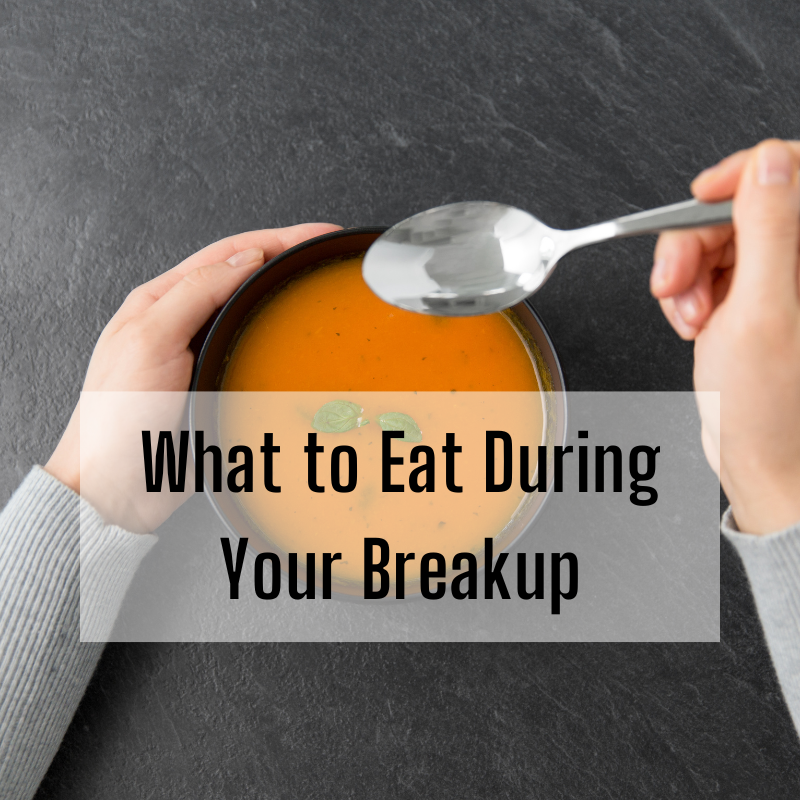
Eating well after a breakup can be difficult for opposite reasons. Some people lose their appetite entirely, while others reach automatically for whatever provides quick comfort. Neither response makes you undisciplined. Your system is trying to get through an unusually stressful period.
The goal is not to begin a pristine wellness regimen while you can barely decide which socks to wear. Make nourishment easy and accessible. Premade soups can be wonderfully useful because they require almost no preparation. Eggs, salmon, and a little dark chocolate are among my personal favorites, but the larger principle is to keep foods available that you will realistically eat.
Try to remove unnecessary obstacles. If cooking feels soothing, use it as a small act of care. If it feels impossible, choose simple meals that require little thought. Fed is better than flawlessly fed.
I have an entire guide on what foods are most beneficial and easeful to enjoy after a breakup. Download it here.
2. Protect Your Sleep Schedule
Heartbreak has no respect for bedtime. Racing thoughts may keep you awake, while sadness and exhaustion may tempt you to sleep late into the day. Unfortunately, once your sleep schedule becomes dramatically irregular, it can make your energy, concentration, and mood even harder to manage.
You may not be able to control exactly when you fall asleep, but you can protect the basic rhythm of your day. Try to go to bed and get up at reasonably consistent times. Create a gentle evening boundary around activities that tend to trigger you, including checking your ex’s social media, rereading old messages, or having emotionally charged conversations just before bed.
A regular schedule is not a guarantee of perfect sleep. It simply gives your body something predictable to work with. If you have a difficult night, resist the urge to treat it as evidence that you are failing at recovery. Return to the routine the following evening and keep going.
Persistent insomnia, excessive sleeping, or exhaustion that interferes with your ability to function deserves professional attention. Self-care and professional care are not competing choices. Sometimes looking after yourself means recognizing when you need more support.
3. How to Create a Routine After a Breakup
Creating a routine after a breakup is common advice for a reason: it works. That does not mean you need to schedule every fifteen minutes of your day or become the sort of person who cheerfully meal-preps at sunrise. A useful routine is simply a dependable structure that reduces unnecessary decisions and helps your life feel less chaotic.
Why Losing the Relationship Also Disrupts Your Day
We often arrange our routines around our partners without noticing how much we are doing it. Perhaps you spoke every morning, planned dinner together, spent weekends in a particular way, or expected a message at the same time each afternoon. If you lived together, your partner’s presence may have shaped nearly every part of the day.
When the relationship ends, those patterns disappear along with it. The resulting emptiness can be a shock to your system. Certain hours suddenly feel too quiet, and familiar times of day may become triggers because your mind is still expecting the contact or activity that used to happen.
A new routine gives those empty spaces a different shape. It cannot replace the relationship, but it can help your surroundings and schedule begin to feel like your own again.
Use Routine to Reduce Decisions and Rebuild Self-Trust
Breakup brain makes decisions harder. When you are already using considerable emotional energy to process loss, even ordinary questions like what to eat, when to shower, whether to leave the house, can feel surprisingly demanding.
Routine removes some of that guesswork. You might get up at the same time, eat breakfast before checking your phone, take a walk after work, and prepare for bed at a consistent hour. These are not glamorous acts, but glamour is rather overrated when what you need is stability.
Following a routine also helps rebuild self-trust. Each time you keep a small promise to yourself, you gather evidence that you are capable of looking after your own needs. Over time, that creates a different kind of security: the knowledge that even though your relationship changed, you can still rely on yourself.
Your routine should also leave room for grief. Structure is meant to support your feelings, not keep you so busy that you never have to experience them.
4. Start With Gentle Exercise After a Breakup
Most of us already know that exercise is good for us. Knowing this does not magically create motivation when we are grief-stricken, exhausted, or struggling to get through the day. This is why I recommend beginning with something simple rather than announcing that heartbreak has turned you into a future triathlete.
Why Walking Is a Useful Place to Begin
Walking is one of the practices I regularly recommend to my breakup coaching clients. It can support your mood, energy, sleep, confidence, and mental clarity without requiring complicated equipment or an intensive plan. Spending time outdoors also changes your environment and gives you a temporary break from the rooms where you may have been sitting with the same thoughts.
Try beginning with three walks a week. A ten-minute walk around your neighborhood still counts. So does a slow walk during which you feel sad.
If three walks feel like too much, begin with one. The point of exercise after a breakup is not to punish your body, transform your appearance, or prove that you are thriving. It is to help your body move through some of the stress it is carrying and to create a little more momentum in your day.
Whenever possible, choose a place with trees, open space, or another element of nature you enjoy. The change of scenery can interrupt rumination and remind you that the world remains larger than the relationship you lost.
5. Consider No Contact a Form of Physical Care
I am a longtime advocate of the no-contact rule because continued communication with an ex can keep you caught in a cycle of hope, conflict, disappointment, and renewed emotional activation. Each new message may seem small, but your body may experience it as another alarm.
Ongoing contact can interfere with sleep, drain your energy, and make clear thinking more difficult. If conversations are tense or unpredictable, you may find yourself constantly waiting for the next message and preparing for the next emotional shift. That is an exhausting way to live.
You can also learn more about the psychology of attachment and separation in my free Breakup Brain ebook. Understanding why the urge to reconnect feels so powerful can make it easier to respond intentionally rather than automatically.
You Do Not Have to Do All Five Things Today
Knowing how to take care of yourself after a breakup does not mean performing every recommendation perfectly. If you are overwhelmed, choose one reliable action. Eat one nourishing meal. Get out of bed at a consistent time. Take a short walk. Decide that you will not check your ex’s social media tonight.
One action will not complete your healing, but it can interrupt the snowball effect that leaves you feeling increasingly depleted. Once that action becomes easier, add another. Recovery is built through repetition far more often than revelation.
If caring for yourself feels overwhelming and you would like a practical recovery plan tailored to your situation, explore my breakup coaching services and schedule a consultation. I can help you understand what is keeping you stuck, establish supportive routines, and move through your breakup with greater clarity and intention.rt.
Want to learn more about breakup grief? Push play on some of my other episodes:
Stages of breakup grief #3: Realization
Stages breakup grief #2: Denial
Stages of breakup grief #1: Devastation



0 Comments