
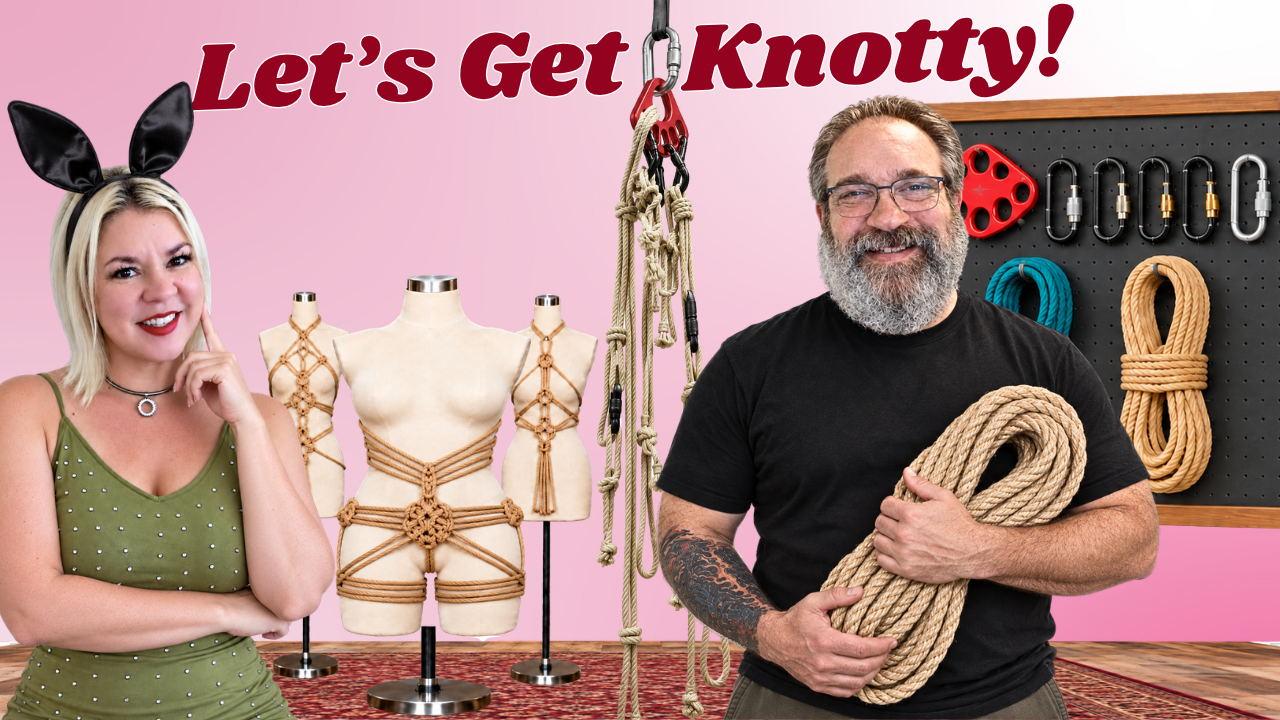

Do you like to be tied up? I do! This episode is all about the kink of rope play.
I am joined by someone brand new to the art of rope tying (my very own partner!) and a very experienced “rigger” for a fun and informative conversation all about this juicy art form.
Watch on YouTube here:
And listen on Spotify here:
I have wanted to do an episode about rope tying since I started Sex and the Solo Girl. Being tied up has turned me on for years, and something I have wanted to both learn and educate others about through my platform.
More recently, my partner Chris and I have started learning rope together. And I do mean learning. We are beginners. We have books open while we practice. We stop and look at things. And we are reveling in the journey.
So when I met Dave Zube, an experienced suspension rigger and Shibari enthusiast who goes by ThunderBunny97 on FetLife, I had to pounce on the chance to invite him on the podcast.
What I wanted most was a conversation about Shibari and rope play for beginners that did not assume everyone listening already knew the vocabulary, owned an elaborate rig, or had any intention of hanging another human being from the ceiling.
Rope play CAN be that elaborate. But it can also simply be two people, a bed, one simple tie, and a whole lot of attention.
Key Takeaways
- Rope play is a diverse and wide art form. It can include decorative ties, restraint, sensory play, suspension, and simple bedroom bondage.
- People like rope for very different reasons, including beauty, restraint, pressure, intimacy, trust, technical skill, and plain old sexual excitement.
- Being tied can feel surprisingly soothing. For me, the feeling of compression and being completely restrained can be deeply relaxing.
- Knowing ordinary knots does not automatically teach you how to use rope safely on a human body.
- Consent and communication need to continue throughout the experience, not end once the rope comes out.
- There is a lot that goes into finding someone to experience rope play with. We fill you in on how.
What Are The Different Types Of Rope Play?
When people first encounter rope play or Shabari (as one type is known), they often encounter the spectacular version of it: beautiful photographs of bodies wrapped in complicated patterns or suspended in the air.
That is certainly part of the rope world. It is not the whole thing.
Dave talked us through several different ways people use rope. Some people are interested in decorative harnesses. Some like being restrained on a bed or another piece of furniture. Some people enjoy what he called “chaos rope,” where the experience is less about constructing a particular pattern and more about wrapping rope around another person and enjoying the act itself.
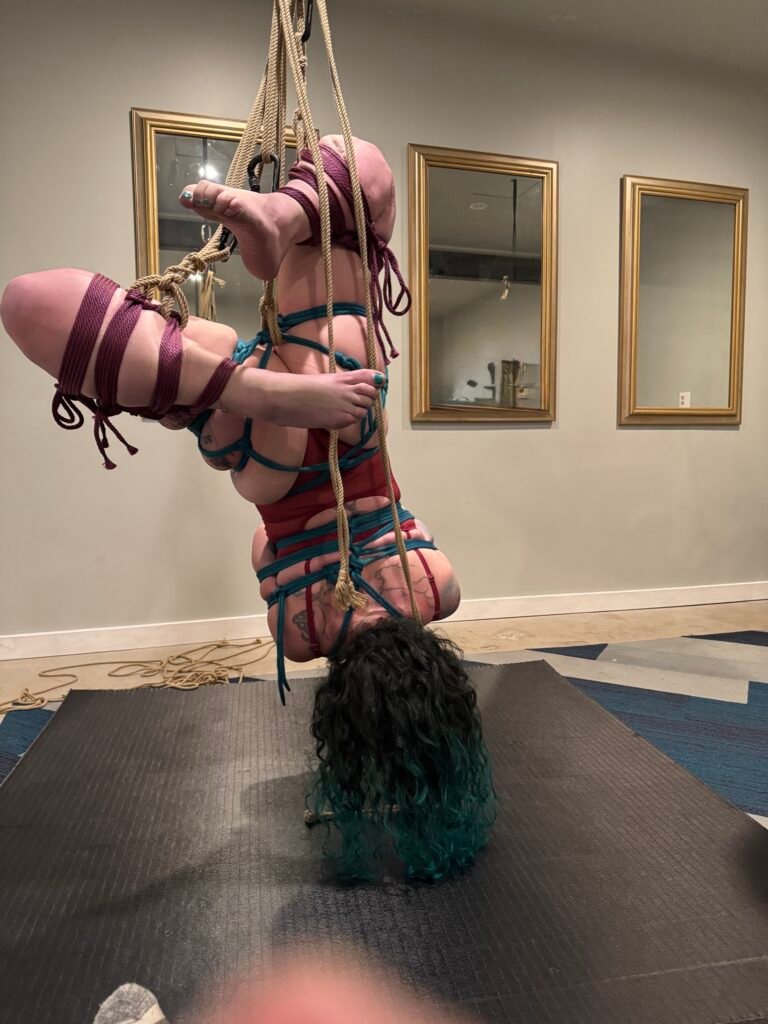
Then, of course, there is suspension—partial suspension, where some of the body stays supported by the ground, and full suspension, where it does not.
Dave told us that when he was newer to rope, he thought suspension was the pinnacle of the whole thing. You learn enough, get good enough and eventually you suspend somebody.
Then he realized plenty of people don't want that at all.
I loved hearing that because beginners can easily get the impression that simple rope is somehow the junior varsity version. It isn't. If what you love is being tied to the bed, having a beautiful harness put on you, or wrapping your partner in rope because it feels intimate and sexy, there is no reason that experience has to become something else.
Why WE Like Rope Play
One of the things I was most curious about was why rope gets people so excited. I know it does for me!
For me, there are several answers.
I love the sensation of rope moving across my skin. I love restraint in general. I think the knots are beautiful, and I like the way my body looks when I am tied.
But there is another piece of it that is harder to explain until you've experienced it with someone who has taken the time to learn.
Rope requires attention.
Chris cannot casually throw a few knots around me while thinking about what we need from the grocery store. He has to look at what he is doing. He has to think about where the rope is sitting, how he is building the tie and how my body is responding.
That intentionality is extremely sexy to me.
My love language is gifts, and part of what I love about receiving a thoughtful gift is knowing that someone paid attention. They noticed something. They remembered it. They put effort into choosing something for me. Rope presses a similar button in my brain. Learning to do it well takes time, and I get to feel the result of that attention physically.
Chris likes another side of it. He enjoys knots, systems and learning how things work. Rope gives him something to study and practice. It is a kink, yes, but it is also a craft.
Dave's interest has an even stronger engineering component. He loves figuring out how rope creates structure on a human body and how that structure can be adapted for different positions and experiences.
But when I asked him about the power aspect of tying someone, his answer surprised me a little. What interests him most is collaboration. He wants rope to be something he does with another person.
I think that explains a lot about why people like rope play. There is room for sex and power, certainly, but there is also room for creativity, beauty, concentration, trust and connection.
What does being tied up feel like?
Dave used the phrase “fibrous hug”, and I immediately knew what he meant.
As rope is wrapped and tension is added, you feel pressure against your body. He compared it to a weighted blanket, except the pressure is directed to particular places rather than spread evenly over you.
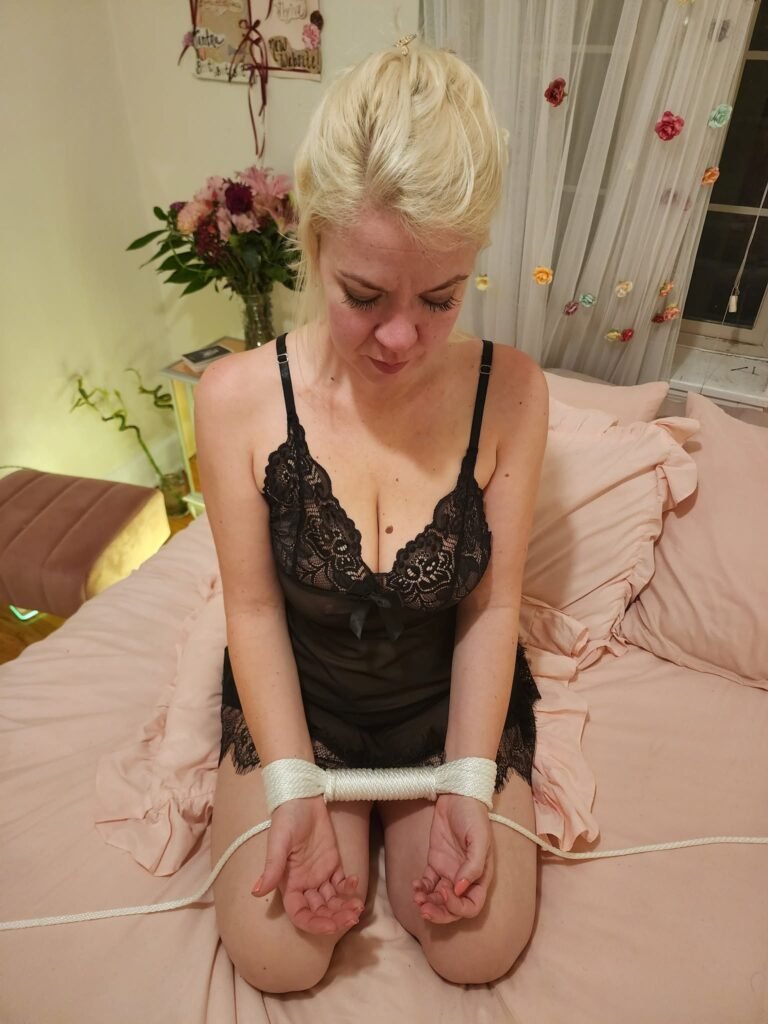
That is very close to how I experience it. Recently, Chris did a full-body tie on me and I stayed restrained and unable to move in it for quite a while afterward. At one point he was reading to me while I was lying there completely bound. It was an incredibly relaxing experience for me.
That will obviously not be everyone's reaction. Someone else might find the same experience thrilling, intensely erotic, vulnerable or simply strange. But I think people who have never been tied sometimes assume the experience must feel harsh because restraint sounds harsh.
Shibari and Rope Play for Beginners Doesn't Have to Mean Suspension
Suspension is beautiful to look at. It is also one of the places where rope becomes much more technically demanding.
Dave does advanced suspension himself, but he deliberately does not teach it when he leads beginner rope instruction. His concern is that teaching somebody a little bit of suspension can leave them confident enough to try it before they have enough experience to deal with problems. I appreciated that answer because there can be an unfortunate phase in learning almost anything where you know just enough to become dangerous.
You can do a great deal with rope without supporting someone's body weight. Chris and I have spent plenty of time on decorative ties, restraint and basic rope handling, and there is more than enough there to keep us learning.
Rope Safety Starts Before the Rope Comes Out
Chris already knew plenty of knots when we started this. He was an Eagle Scout. He knows functional knot tying and lashing and all sorts of things that I absolutely do not. That did not mean he automatically knew how to tie a human body.
The body introduces completely different concerns. There are joints, nerves and places where pressure can cause potentially permanent injuries much faster than somebody might expect. Dave talked about being particularly careful around vulnerable areas and paying attention if the person in rope notices numbness, pain, or another sensation that doesn't feel right.
You also need to be able to get someone out. That sounds obvious, but it becomes much more complicated as the rope becomes more complicated. Dave keeps equipment available that allows him to cut rope quickly if necessary. With suspension, even that becomes a technical problem because you cannot simply cut a line that is holding somebody's body in the air.
For a beginner, I think the useful lesson is fairly simple: learn and never improvise. You do not need to know advanced emergency suspension procedures before trying a decorative tie on the bed. You do need enough education for the kind of rope play you are actually engaging in.
The person being tied has a job too
One of the beautiful (and necessary!) things about rope play is that it requires so much communication.
If your hand is going numb, say something. If a position suddenly hurts, say something. If you thought you wanted a particular experience and discover halfway through that you don't, say something.
People who spend more time being tied also become better at recognizing how their own bodies respond. Dave talked about experienced rope bottoms learning to adjust themselves and communicate what is happening physically.
You don't arrive knowing that. You learn your body in rope by spending time in rope.
And yes, you can change your mind
Dave and I also talked about something that should be familiar from any conversation about sex and consent: plans do not create consent.
Maybe you have spent a week messaging someone about a rope scene. Maybe they have packed their equipment and driven across town. Maybe everybody was enthusiastic yesterday.
You can still decide you don't want to do it today.
How to Learn Rope Play as a Beginner
I would strongly encourage anyone interested in Shibari and rope play for beginners to treat learning as part of the fun rather than as an annoying obstacle between you and the sexy part.
Dave mentioned several ways to learn. Here in Denver, there are groups and studios that teach rope in person, and other large cities have their own rope communities. He also recommended online resources including The Duchy and Shibari Study.
Chris has discovered that books work particularly well for him.
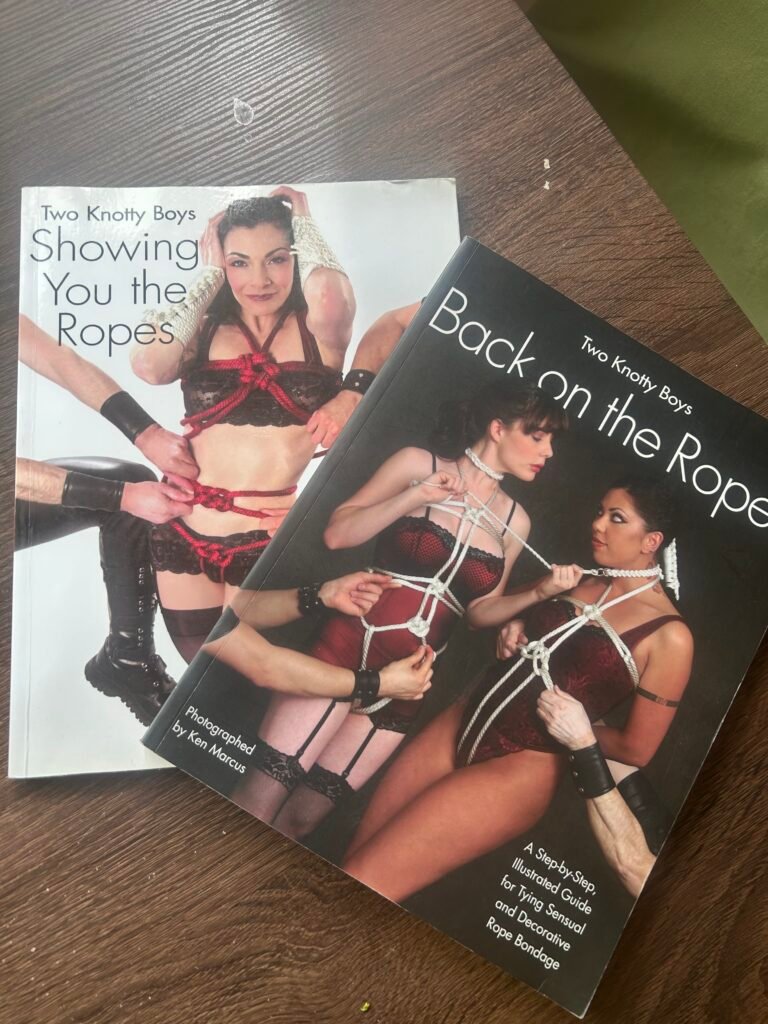
He likes being able to leave a book open beside us, work through a tie one step at a time and go back when something does not look right. That has suited us because I get to be part of the learning process rather than showing up after he has supposedly mastered everything in private.
Books that we use:
There is also some basic equipment involved. Different kinds of rope behave and feel differently, and some materials will be more appropriate for certain types of tying than others. Your partner's comfort matters as well; Dave mentioned that some people have sensitivities and even allergies to particular fibers.
You do not need to buy every kind of rope you see. Learn what you want to do first.
Then buy accordingly.
How to Find and Vet a Rigger
If what interests you most is being tied, you may eventually run into a different problem: what if you don't know anyone who can safely do it?
Dave's advice was to start with community rather than simply scrolling through beautiful pictures until you find someone whose work makes you swoon.
FetLife has groups for people who enjoy being tied, and local rope communities can be very useful for figuring out who is active, who teaches and who has a good reputation.
Talk to other rope bottoms.
Ask what their experiences were like. How someone negotiates a scene. Ask whether they listen. Ask what happens when the person being tied says something needs to change.
Dave also suggested asking a potential rigger directly about their experience. How long have they been tying? How many people have they worked with? Have injuries ever happened? Has somebody ever raised a concern about a scene, and if so, how did they handle it?
I don't expect anyone who has worked with human beings for years to have a perfectly spotless history in which nothing uncomfortable, confusing or imperfect has ever occurred. I am much more interested in what somebody does when it does.
Do they become defensive?
Do they blame the other person?
Or can they talk openly about what happened and what they learned?
Pretty rope pictures are not a character reference
I say this as someone who very much appreciates pretty rope pictures.
A gorgeous FetLife profile can show you that somebody knows how to create gorgeous rope. It cannot tell you everything about how they behave with a vulnerable person.
When someone ties you, you are trusting them with your body. Depending on what you are doing, you may also be giving up a significant amount of your ability to move.
Take that seriously.
You are allowed to be impressed by someone's work and still ask questions.
There Is No Correct Reason to Want Rope
There are many reasons somebody may have to want to experiment with rope play. Some can love the ideas of power and control, or submission and restraint. Other times it can be a comfort and a release.
Other times, rope for us is much quieter. Sometimes we are practicing. Sometimes I simply like the feeling of being restrained. Sometimes Chris is interested in figuring out a new tie and I am delighted to volunteer as tribute.
Dave made a point during our conversation that I hope beginners hold onto: you do not have to copy somebody else's relationship with rope.
There are techniques that need to be learned correctly because bodies and gravity are real things. But nobody else gets to decide what part of rope is supposed to turn you on.
Maybe you love the art. Maybe you want restraint. Maybe you want the concentration and attention of somebody carefully tying you. Maybe you just discovered the phrase “fibrous hug” and thought, Well, that sounds awfully nice.
Follow that curiosity.
If you want to hear much more about getting started with rope, listen to my full Sex and the Solo Girl episode, “Shibari & Rope Tying: What to Know Before You Get Started.” Chris and I talk with Dave about safety, suspension, learning, consent, being tied and finding your way into the rope community.
You can also find Dave and his work on FetLife at ThunderBunny97.
As for me? Follow me at DenverFlowerGirl.
And if this is all brand new to you, you don't need to know yet exactly where you want rope to take you. You can start by finding out what feels good.
🍷🍷Want to buy me a glass of wine? Head to my Patreon here. 🍷

0 Comments